

Paperboard selection affects how a package holds its shape, receives printing, looks and feels, and behaves during converting. The final application matters as much as the appearance of the sheet.
A useful starting point is the complete packaging project: structure, product, printing, converting and end use. Choosing a material by appearance or weight alone can leave important requirements unresolved.
1. Start With the Packaging Structure
Material selection should follow the intended packaging structure. Different formats place different demands on the board and any surface papers used with it.
- Folding Cartons: consider how the paperboard will crease, fold and form into the selected carton.
- Rigid Boxes: consider the rigid construction together with the surface or wrapping material used for presentation.
- Foldable Rigid Boxes: consider both the rigid-style presentation and the folding and assembly arrangement.
- Large-Format Folding Cartons: consider the larger printed panels alongside stiffness and converting requirements.
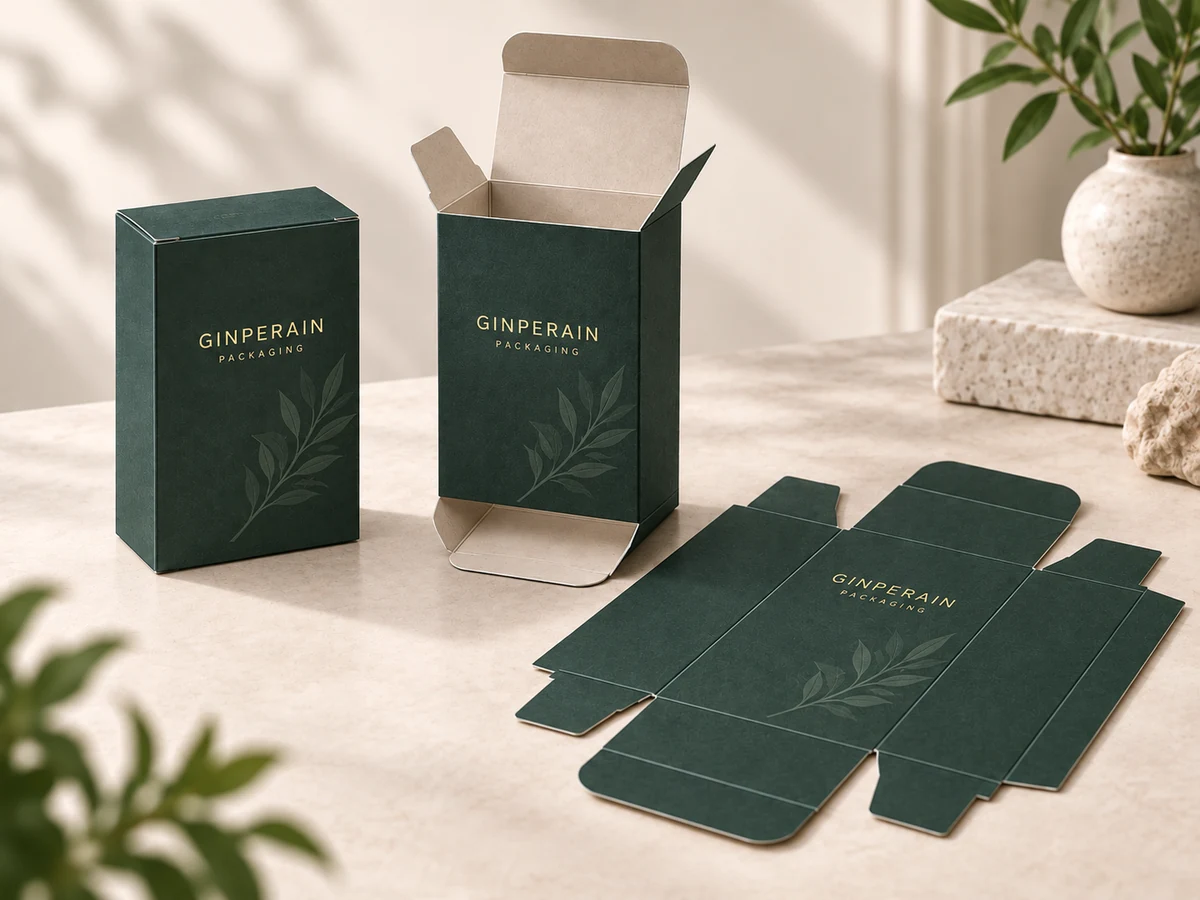
Explore Folding Cartons, Rigid Boxes and Large-Format Folding Cartons to relate material discussions to the intended format. If the structure is still undecided, start with How to Choose the Right Packaging Structure for Your Product.
2. Consider Product Size and Weight
The product and packing arrangement help define what the material needs to do. Useful information includes:
- product and box dimensions
- product weight
- number of components in each pack
- the stiffness needed for the intended structure
Larger panels, several items in one box or a different packing arrangement may change the material discussion. Evaluate those details with the structure rather than selecting board from a fixed GSM rule. A material specification needs to suit the particular project.
3. Printing and Surface Appearance
The paperboard surface influences color reproduction, printed detail, surface feel and compatibility with finishing. Describe the appearance you want to achieve as well as the graphics that will be printed.
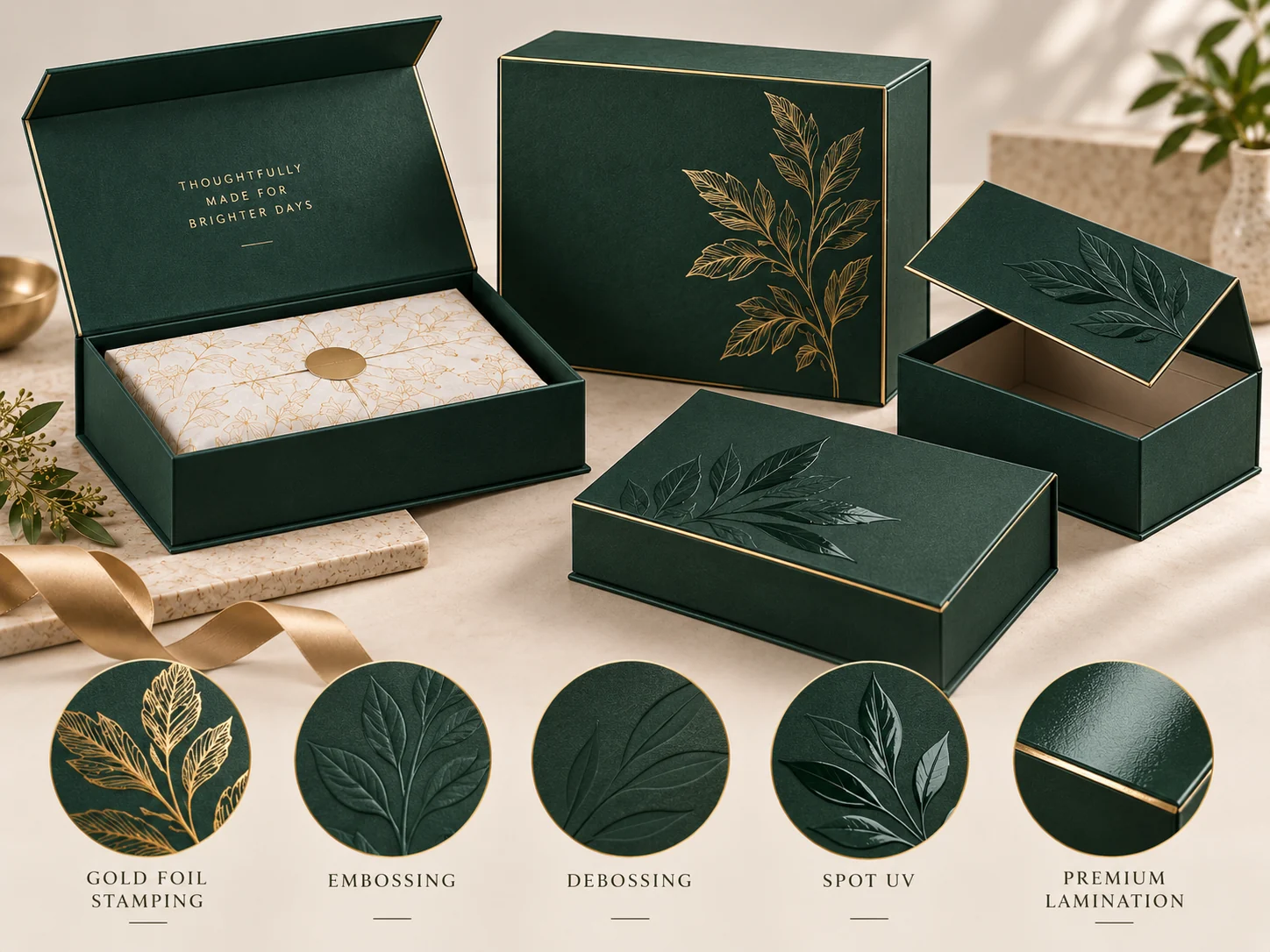
Discuss the intended use of:
- Offset Printing
- Foil Stamping
- Embossing / Debossing
- Spot UV
- Matte / Gloss Lamination
Material and finishing choices should be reviewed together. A design may look different on another surface, and an effect should be evaluated for the selected material rather than assumed to work identically across all boards.
See the Printing & Finishing category for related reading.
For the related color-planning decision, CMYK vs Pantone for Packaging Printing explains how artwork and brand-color needs inform the printing approach.
4. Paperboard Stiffness and Converting Performance
An attractive surface is only part of the decision. The board must also suit the steps that turn a printed sheet into a usable package:
- creasing
- folding
- die-cutting
- gluing
- box forming
Consider how stiffness supports the intended shape and how the material behaves at folds, edges and joining areas. These requirements need to be reviewed together with the design. A board chosen only for its appearance may not be the right match for the planned converting and assembly process.
5. White, Natural and Specialty Surface Options
Broad visual directions can help explain a preference without committing to a detailed material specification too early.
- White coated paperboard: a direction to consider when discussing a white print surface and the intended graphic presentation.
- Natural / kraft appearance: a direction for projects seeking a natural-looking surface; its tone should be considered alongside printed colors.
- Specialty surface papers: an option to discuss when texture or a distinctive surface is part of the presentation.
These are starting points for a material discussion, not interchangeable specifications. The selected surface still needs to suit the structure, printing, finishing and final use.
6. Food-Contact Applications
Not every paperboard material is suitable for direct food contact.
Projects involving food-contact applications should be evaluated separately based on:
- product type
- direct vs secondary contact
- packaging structure
- target-market requirements
Ginperain can support selected paper and board materials intended for food-contact applications, subject to project requirements and applicable target-market requirements.
Disclose any food-contact requirements during the RFQ or project review, including whether the material will touch the food directly or serve as secondary packaging. This information needs to be considered before a material is selected.
7. Material Choice for Large-Format Packaging

Larger-format printed cartons may require additional attention to stiffness, print format, converting and structural stability. Larger panel areas should be considered together with the product and packing arrangement.
Discuss the intended dimensions, printed layout and forming process when reviewing material options for Large-Format Folding Cartons. The focus is the specified printed carton and its application, rather than assuming that size alone establishes suitability.
8. Questions to Ask Before Choosing Paperboard
- What packaging structure will be used?
- What is the product size and weight?
- What surface appearance is required?
- What printing and finishing will be used?
- Is direct food contact involved?
- What is the target market?
- Is flat-packed delivery required?
- What quantity is planned?
Share the answers you already have and identify any points that are still open. This helps connect material selection to the actual project requirements.
Conclusion
No single paperboard is right for every packaging project. The suitable material depends on the structure, product, printing, converting and final use.
Start with your packaging requirements and intended appearance. Material options can then be evaluated in the context of the complete package.