

Accurate dimensions help with structure selection, product fit, material planning, quotation and production preparation. Clear measurements also make it easier to understand what the packaging needs to hold.
You do not need the final box size before the first inquiry. If the packaging has not yet been designed, start with product dimensions and packing requirements.
1. Understanding L × W × H
Box dimensions are commonly communicated as Length × Width × Height, often shortened to L × W × H. Orientation can vary between packaging structures and suppliers, so the order should not be treated as one universal rule.
- Use a consistent measurement order.
- Label length, width and height clearly.
- Confirm the intended orientation with the packaging supplier where necessary.
A simple description or labeled sketch can help explain which direction each measurement refers to.
2. Internal Dimensions vs External Dimensions
Internal dimensions describe the usable space inside the packaging. External dimensions describe the finished outside dimensions of the box.
Board thickness, folds and structural construction can create differences between the two. Do not assume that the outside measurements describe the space available for the product, or subtract a fixed amount to estimate it.
Use clear, consistent dimensions and identify whether measurements refer to the product, the inside of the box, or the outside finished box.
3. Measure the Product Before the Box
When the final packaging has not been designed, record the product measurements first. Useful information includes:
- product length
- product width
- product height
- maximum overall dimensions
- accessories or components
- number of products per box
This information helps evaluate suitable structures and the space required for the intended packing arrangement. Identify whether measurements cover a single item or the complete group of items to be packed.
4. Allowance and Product Fit
Packaging dimensions should not always equal the exact product dimensions. The required fit may need to account for:
- inserts
- internal components
- ease of packing
- ease of product removal
- packing method
- manufacturing tolerance
- product orientation
Discuss these factors with the packaging supplier for the selected structure. There is no fixed allowance in this guide: the appropriate space and tolerance need to be considered for the actual product and construction.
5. Measuring Different Packaging Structures
The structure affects how internal space is created and which measurements need to be confirmed. Keep product measurements separate from the dimensions of the finished package.
Folding Cartons
For Folding Cartons, clarify the finished carton orientation and whether the dimensions are internal or external. Flat blank dimensions are different from the dimensions of the formed carton.
Rigid Boxes
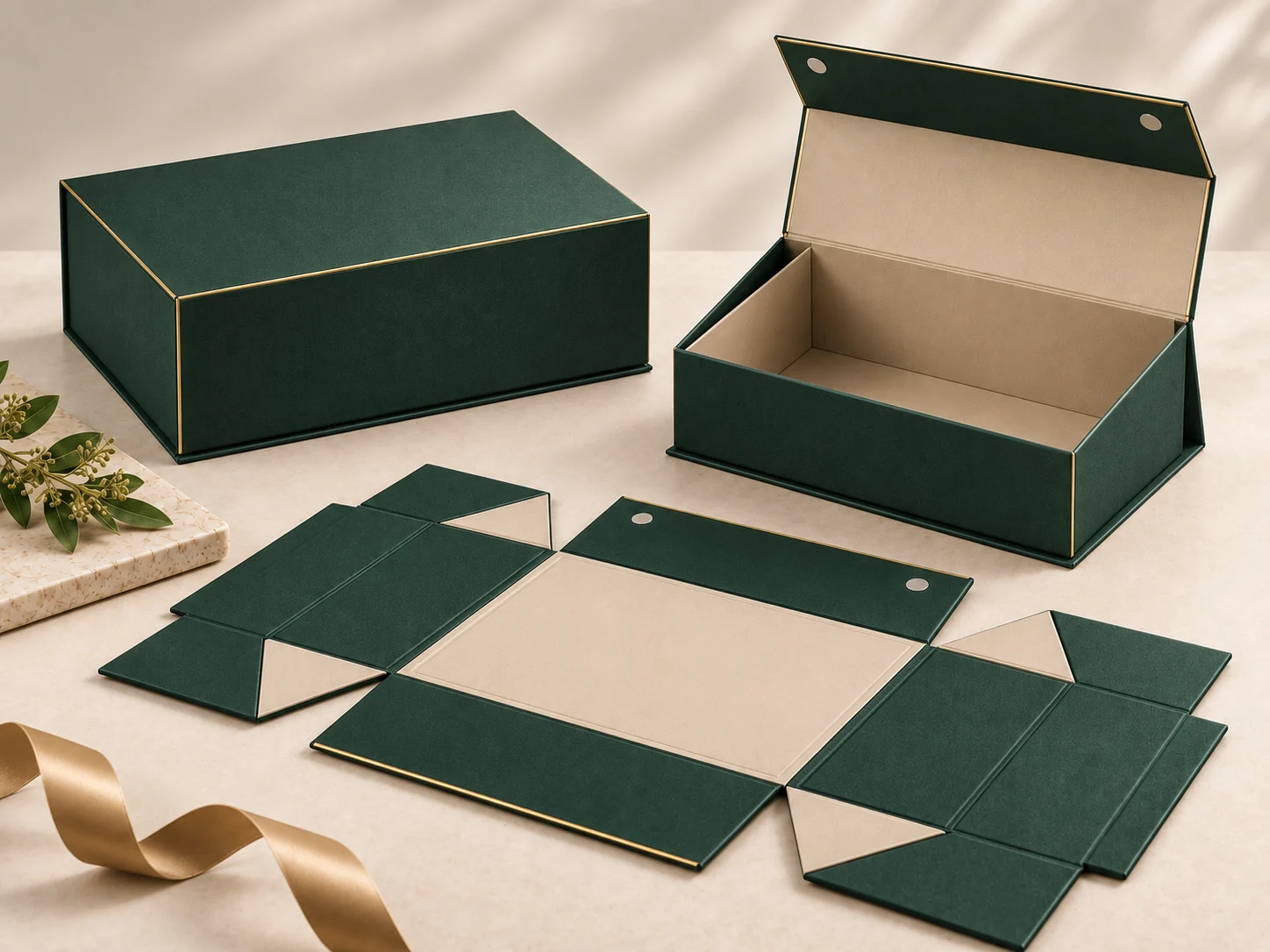
For Rigid Boxes, distinguish the usable interior from the outside construction. Include any internal components when discussing the space available for the product.
Drawer Boxes
A drawer design has a sleeve and a tray. Identify whether measurements refer to the usable tray interior or the complete outside pack. See Foldable Drawer Rigid Boxes for this structure.
Lid & Base Boxes
A two-piece design requires clarity about the base, lid and complete closed box. State which component or finished assembly has been measured when discussing Foldable Lid & Base Rigid Boxes.
Large-Format Folding Cartons
For Large-Format Folding Cartons, provide the product’s maximum dimensions and intended packing orientation. Confirm the formed box dimensions separately from the flat printed layout.
6. How to Measure Irregular Products
For irregular or non-rectangular products:
- measure maximum overall dimensions
- identify protruding parts
- note the intended packing orientation
- include accessories and components
- provide photos or sketches where helpful
Describe what each measurement includes, especially where a handle, projection or accessory extends beyond the main body. A clear description can accompany the initial inquiry; photos or sketches can be shared later during project discussion.
7. Units and Dimension Format
Clearly specify:
- the unit: mm, cm or inches
- the order: L × W × H
- whether these are product dimensions or box dimensions
- whether box dimensions are internal or external
Example only: Product dimensions — L 200 × W 150 × H 80 mm, measured in the intended packing orientation.
This example illustrates a clear format, not a recommended box size or allowance. Use your own measurements and label the basis of those measurements.
8. Common Measuring Mistakes
Confusing Internal and External Dimensions
Outside measurements do not describe the usable interior. Label the measurement basis rather than leaving the supplier to infer it.
Changing the Measurement Order
Switching the order between messages can create uncertainty. Keep the same labels and confirm the orientation if the structure changes.
Forgetting the Unit
A set of numbers without mm, cm or inches is incomplete. Include the unit every time you provide dimensions.
Ignoring Accessories or Protruding Parts
Measure the full arrangement that will go into the box, including parts that extend beyond the main product body.
Not Accounting for Inserts
An insert or other internal component can affect usable space and product position. Identify it during the fit discussion rather than assuming the product dimensions alone are enough.
Assuming an Existing Box Size Is Exact
Treat an existing box as a reference and identify how it was measured. Confirm that its size and construction suit the current product rather than assuming it provides the final production dimensions.
9. What If You Don’t Know the Final Box Size?
You can request a packaging evaluation without knowing the final box dimensions. Useful starting information includes:
- product dimensions
- product photos or a description
- quantity
- number of products per package
- intended packing arrangement
- presentation requirements
The structure and final box dimensions can be discussed as the project develops. For the broader inquiry checklist, see What Information Is Needed for a Packaging Quote?.
10. Packaging Measurement Checklist
- Product dimensions
- Measurement units
- Number of products per box
- Product or box dimensions clearly identified
- Internal or external dimensions clearly identified
- Packaging structure, if known
- Inserts or accessories
- Product orientation
- Photos or sketches where useful
- Estimated quantity
File upload is not required for the initial inquiry. Share the information you have and discuss any useful reference files with the team later.
Conclusion
Accurate measurements help make packaging evaluation more efficient, but you do not need to finalize every technical detail before requesting a quote. Start with the product dimensions and the information already available.
Label measurements consistently and make clear whether they describe the product, the usable interior or the outside finished box. The remaining fit and structure details can then be reviewed together.