
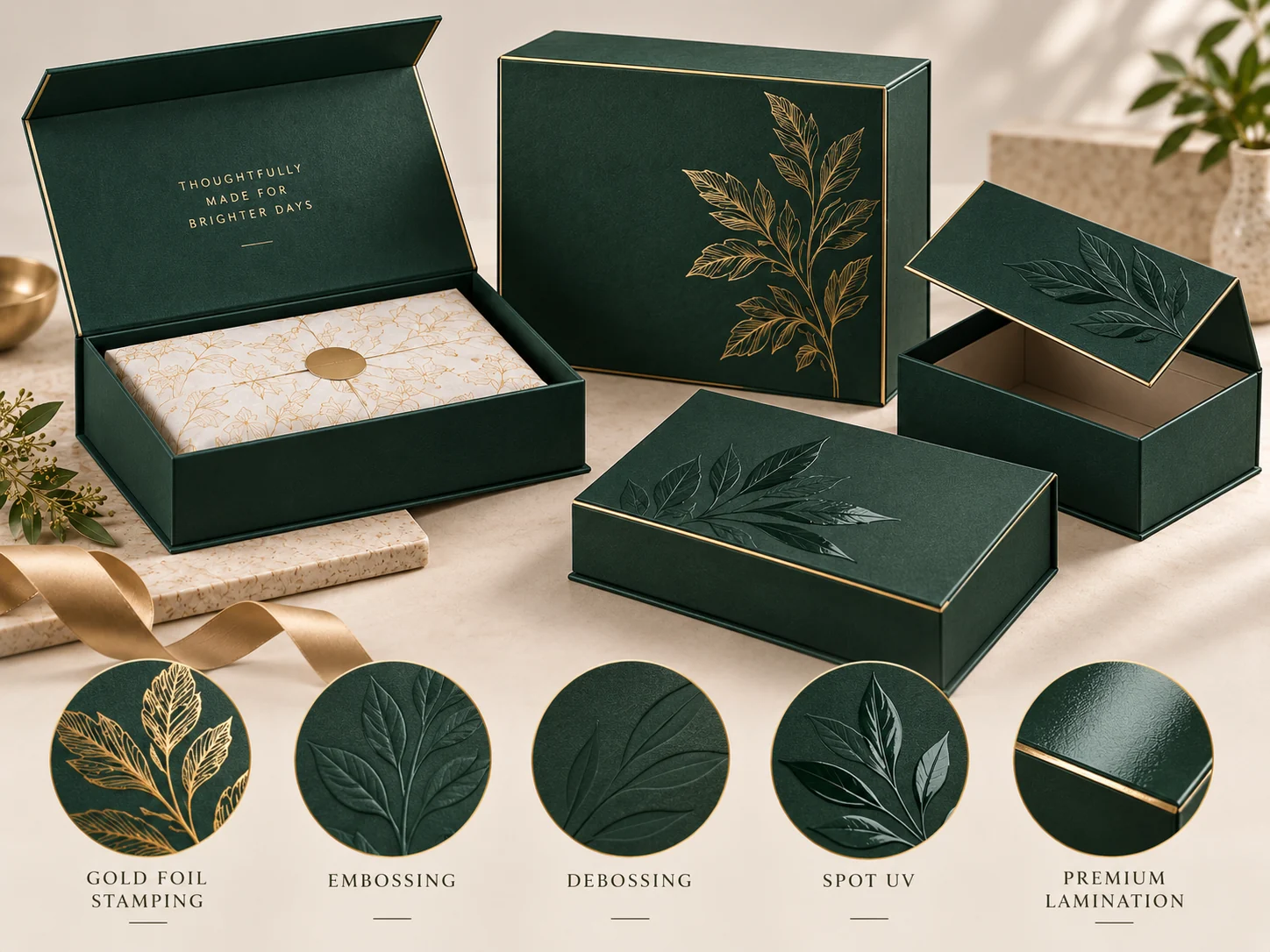
Finishing can influence packaging presentation and guide attention toward particular information or design elements. Foil stamping and Spot UV are two commonly used techniques that create different effects.
The choice depends on the project rather than a simple better-or-worse comparison. Consider the design goals, packaging structure, material, artwork and production requirements together.
1. What Is Foil Stamping?
Foil stamping applies a metallic or specialty foil to selected areas of packaging. Depending on the chosen foil and design, it may create metallic appearance, reflective accents, strong contrast or highlighted logos and text.
Typical uses may include:
- logos
- titles
- borders
- decorative elements
- premium presentation areas
These effects should support the intended presentation. Adding foil does not by itself establish a particular quality level or guarantee a visual result.
2. What Is Spot UV?
Spot UV applies a glossy coating to selected areas of printed packaging. It is often used to create contrast between matte and gloss surfaces, or between a background and highlighted graphic elements.
Typical uses may include:
- logos
- patterns
- text
- selected images
- graphic highlights
The visible effect depends on the substrate—the material being finished—the base print and the surrounding surface treatment. Review those elements together when discussing the intended gloss contrast.
3. Foil Stamping vs Spot UV: Key Differences
| Factor | Foil Stamping | Spot UV |
|---|---|---|
| Main Effect | Metallic / reflective accent | Gloss contrast |
| Application | Foil layer applied to selected areas | Gloss coating applied to selected areas |
| Typical Use | Logos, titles and decorative accents | Patterns, details and highlighted graphics |
| Visual Style | Metallic and decorative appearance | Selective gloss and surface contrast |
| Artwork Preparation | Separate foil application areas | Separate UV application areas |
| Can Be Combined | Yes, depending on the project | Yes, depending on the project |
4. When Foil Stamping May Be a Better Fit
Foil may be suitable when the design calls for:
- an emphasized brand logo
- metallic accents
- gift-packaging details
- highlighted text
- decorative borders or elements
For example, a foil accent may help distinguish a title from surrounding graphics. Its placement and appearance should be considered as part of the full design.
Foil can be discussed for Rigid Boxes where appropriate, but rigid-box presentation does not always require it. The intended appearance should guide the decision.
5. When Spot UV May Be a Better Fit
Spot UV may be suitable for:
- matte/gloss contrast
- subtle graphic enhancement
- detailed patterns
- selected image or text highlights
- modern retail packaging presentation
Rather than adding a metallic accent, the aim may be to draw attention through a difference in surface gloss. How noticeable that difference is depends on the surrounding design and material.
For Folding Cartons, discuss the selected graphic areas and base surface when considering Spot UV. It is one presentation option, not a requirement for retail packaging.
6. Can Foil Stamping and Spot UV Be Used Together?
Some packaging projects may combine multiple finishing processes. A design might use a foil-stamped logo alongside a Spot UV pattern or graphic detail.
Whether that combination is appropriate depends on:
- artwork
- substrate
- packaging structure
- production sequence
- project requirements
Combining processes is not automatically beneficial. Each effect should have a clear role in the design, and the proposed combination should be confirmed during production review.
7. Artwork Requirements for Finishing Effects
Finishing processes usually require clearly defined artwork areas. Useful information includes:
- foil application area
- Spot UV application area
- layer separation
- placement
- alignment with the confirmed dieline
Identify which elements receive each effect and confirm how the production team wants those areas supplied. A visual mockup can help explain the intention, but the finishing instructions must also be clear.
See Artwork Requirements for Custom Printed Packaging for the wider artwork-preparation checklist.
8. How Surface Materials and Lamination Affect the Result
Perceived finishing results may vary with:
- paperboard surface
- coating
- matte lamination
- gloss lamination
- ink coverage
- lighting
The same design idea may appear different on another surface or under different lighting. Evaluate the intended finish together with the selected material and surrounding treatment rather than assuming one combination always looks better.
9. How Foil and Spot UV Fit Into the Overall Packaging Design
Finishing should support brand presentation, information hierarchy, product positioning and the overall artwork. Decide which elements deserve attention and how the effects relate to the structure, folds and visible panels.
Treat finishing as part of the design discussion rather than a decorative addition made in isolation. Printed color and surface effects also need to work together; CMYK vs Pantone for Packaging Printing explains the related color-planning considerations.
Explore the Printing & Finishing category for related guides.
10. Which Finishing Option Should You Choose?
Foil stamping may be considered for metallic emphasis, decorative highlights and strong logo or text accents. Spot UV may be considered for gloss contrast, subtle surface enhancement and highlighted graphic areas. Some projects may use both.
Foil stamping and Spot UV create different visual effects. The suitable choice depends on design goals, packaging structure, substrate, artwork and production requirements.
Confirm the final choice during artwork and production review, with a clear explanation of the effect you want to achieve.